


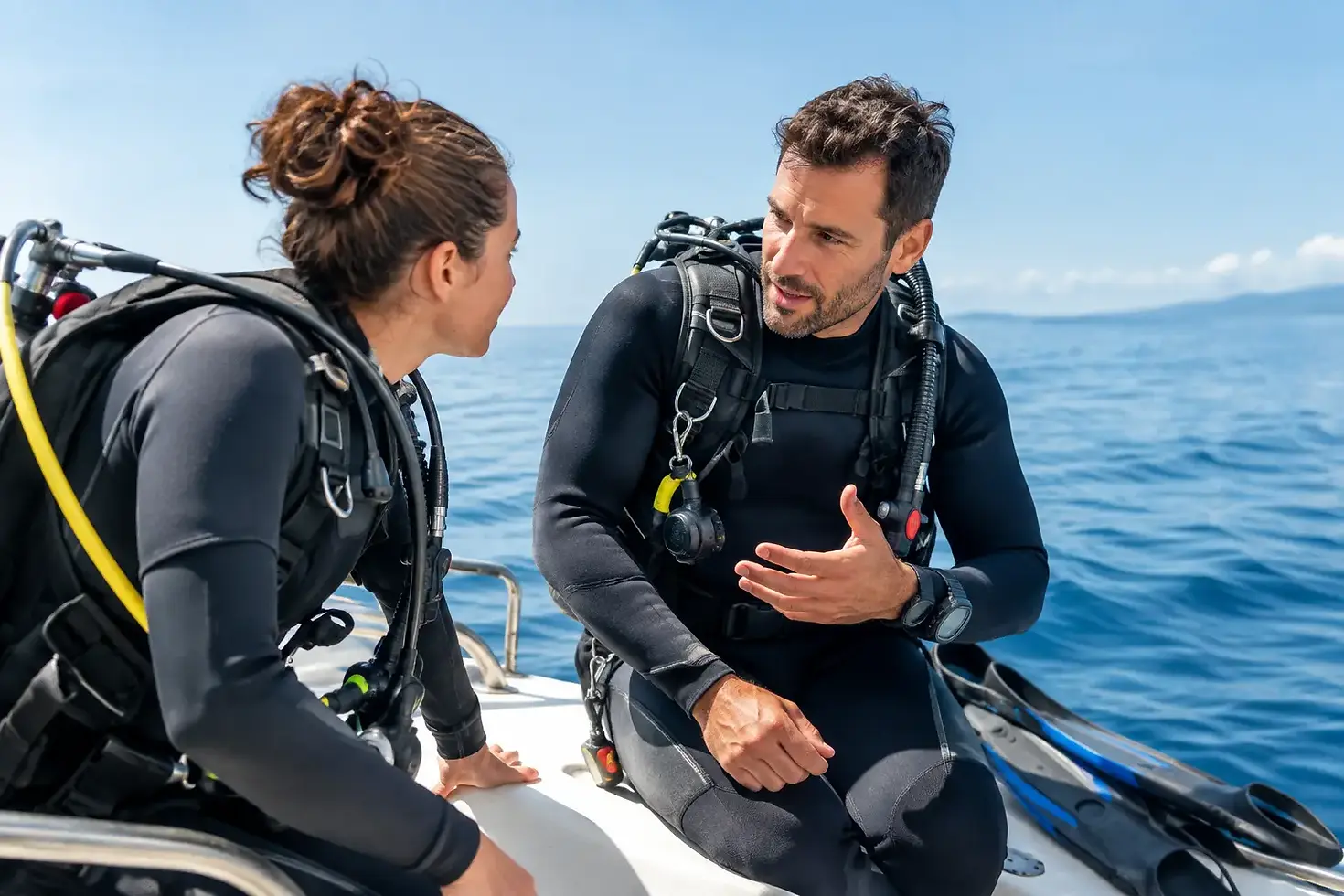
Example of a Rescue Dive Itinerary for Divers

A Rescue Diver course can be one of the most rewarding things you do in scuba, but it is not a vacation built around sleeping late and drifting through easy reef dives. You will practice recognizing stress, managing tired divers, responding to emergencies, and organizing a scene when things get busy. The right schedule makes room for that work while still giving you time to enjoy the destination.
This example of a rescue dive itinerary is designed for a seven-night trip at a warm-water dive resort. It works especially well for divers who want to earn a major certification without turning every waking hour into coursework. Exact schedules vary by instructor, operator, weather, and local conditions, but this is the kind of plan we recommend when the goal is meaningful training plus a great dive getaway.
What a rescue dive trip should include
A good Rescue Diver itinerary has three jobs. First, it needs protected time for academics, practical skill sessions, and scenario-based training. Second, it should avoid stacking demanding water work with late nights, long transfers, or a flight home the next morning. Finally, it should include a little breathing room. Skills tend to click faster when you are rested, hydrated, and not racing from breakfast to the boat every day.
Before booking, confirm what your selected training agency and instructor require. Most Rescue Diver courses require an Advanced Open Water-level certification or equivalent experience, current CPR and first-aid training, completed knowledge development, and a medical form. Some students arrive with online coursework finished, while others prefer to complete it on property. That choice changes how much free time the itinerary has.
A resort-based course is often the easiest fit for a first rescue certification. You have a consistent instructor, short boat rides or shore access, a predictable place to dry gear, and no need to pack up between training days. A liveaboard can work for experienced divers who are comfortable with a more intensive schedule, but it is not always the best setting for a first rescue course. Space, timing, and access to a quiet training area can be more limited.
An example of a rescue dive itinerary
Day 1: Arrive, settle in, and check your gear
Plan to arrive with enough daylight to settle into the resort, assemble equipment, and meet the dive team. This is the time to discover a missing fin strap, a weak dive-computer battery, or a regulator that needs attention, not 10 minutes before the first training session.
Keep the evening simple. Have dinner, hydrate, review the week’s schedule, and get a good night of sleep. If you are traveling with a buddy who is not taking the course, this is also a good moment to set expectations around the training days and plan shared activities later in the week.
Day 2: Orientation, academics, and a relaxed checkout dive
Start with a course orientation. Your instructor will review objectives, local procedures, emergency equipment, communication methods, and how the practical scenarios will run. If you have not completed your knowledge development in advance, reserve a meaningful part of the day for it. Rescue training is more effective when you understand the reasoning behind a response, not just the steps.
Many operators can add an easy afternoon checkout dive. This is not about testing your rescue skills yet. It is a chance to adjust weighting, become comfortable in local conditions, and check that your gear is working as expected. A calm reef dive can also help shake off travel fatigue before the more active days begin.
Day 3: Confined-water rescue skills
Day three is usually hands-on and busy. In a pool, calm lagoon, or protected shoreline, you may practice recognizing a distressed diver, approaching safely, helping a panicked diver, surfacing an unresponsive diver, and providing assistance at the surface. You may also work through exit techniques and emergency equipment use.
These exercises can be surprisingly physical. A person who is perfectly comfortable making several relaxed reef dives a day may still be tired after towing practice and repeated scenarios. Leave the afternoon open for lunch, a break, and an instructor debrief. If everyone is feeling strong and conditions are easy, a late fun dive may be possible, but do not treat it as guaranteed.
Day 4: Open-water scenarios and response practice
This is where the course begins to feel more like real-world diving. In open water, your instructor may build scenarios around a missing diver, a tired diver at the surface, an unresponsive diver, or a simulated emergency that requires teamwork and problem solving. You will learn to assess what is happening, call for help, direct other divers, and stay focused while the situation changes.
The goal is not to perform a perfectly memorized routine. It is to develop awareness and composure. Conditions are never identical in actual emergencies, so good rescue training teaches you to think, communicate, and use the resources around you.
Afterward, give yourself a quiet evening. Skip the temptation to turn this into a party night. You are building skills that rely on attention and sound judgment, and you will likely have another full day in the water.
Day 5: Final scenarios and certification completion
The final training day often brings together the skills practiced earlier in the course. Expect longer, more complete scenarios where you identify a problem, organize a response, manage the diver, and complete post-rescue procedures. Depending on the instructor and course structure, this may be the day you complete remaining assessments and receive certification.
Celebrate, but keep the plan sensible. A good dinner with your group is well earned. If you want cocktails, save them until all diving for the day is finished and follow your instructor’s guidance. Hydration, food, and rest still matter after a demanding day in the water.
Day 6: Fun dives and the reason you traveled
Now you get to enjoy the destination with new confidence. Schedule two relaxed morning dives at sites that match your experience level and interests. Think colorful reefs, turtles, gentle walls, wrecks within your training limits, or a favorite local site your instructor recommends.
This is also a great day for the non-diving side of the trip. Add a beach afternoon, a local food tour, a nature excursion, or a sunset cruise if the destination offers it. A well-planned dive vacation should not make you choose between the underwater experience and the place you traveled to see.
Day 7: A final easy dive, then surface time
If your flight schedule and no-fly guidance allow, a single early, conservative dive can be a nice finish. Many travelers prefer to make day seven completely dry, especially after several active days. That gives you time for sightseeing, souvenirs, packing, and a stress-free final evening.
The key is to protect your surface interval before flying. Your instructor, dive computer, and training agency guidance should shape this decision. Do not squeeze in an extra dive simply because it is the last day. The best final dive is the one that still leaves you plenty of time to travel home safely.
Day 8: Depart rested, not rushed
Build departure-day transfers around your flight time and your required no-fly interval. International routes can involve early departures, ferry connections, regional flights, or unexpected schedule changes. This is where having the entire trip coordinated matters as much as choosing a good dive operator.
How to make this itinerary work for your group
A rescue course is an excellent trip for couples, friends, or dive buddies, but not everyone has to follow the same plan. One traveler may complete the course while another books daily fun dives, snorkeling, spa time, or local excursions. The important part is choosing a resort and destination where both schedules can work without anyone feeling sidelined.
It also pays to be honest about your recent diving. If you have not been underwater in a year or your buoyancy feels rusty, add a refresher dive before starting rescue training. If you are already logging regular dives and have current first-aid training, the course may move more efficiently. There is no prize for rushing through it.
At Scuba Dive Agent, we help divers match the course, resort, flights, transfers, and extra vacation days to the way they actually want to travel. A rescue certification should leave you more capable, not worn out from trying to coordinate every detail yourself.
The best itinerary gives you enough challenge to grow, enough downtime to absorb what you learned, and at least a few moments underwater that remind you why you became a diver in the first place.


Comments