


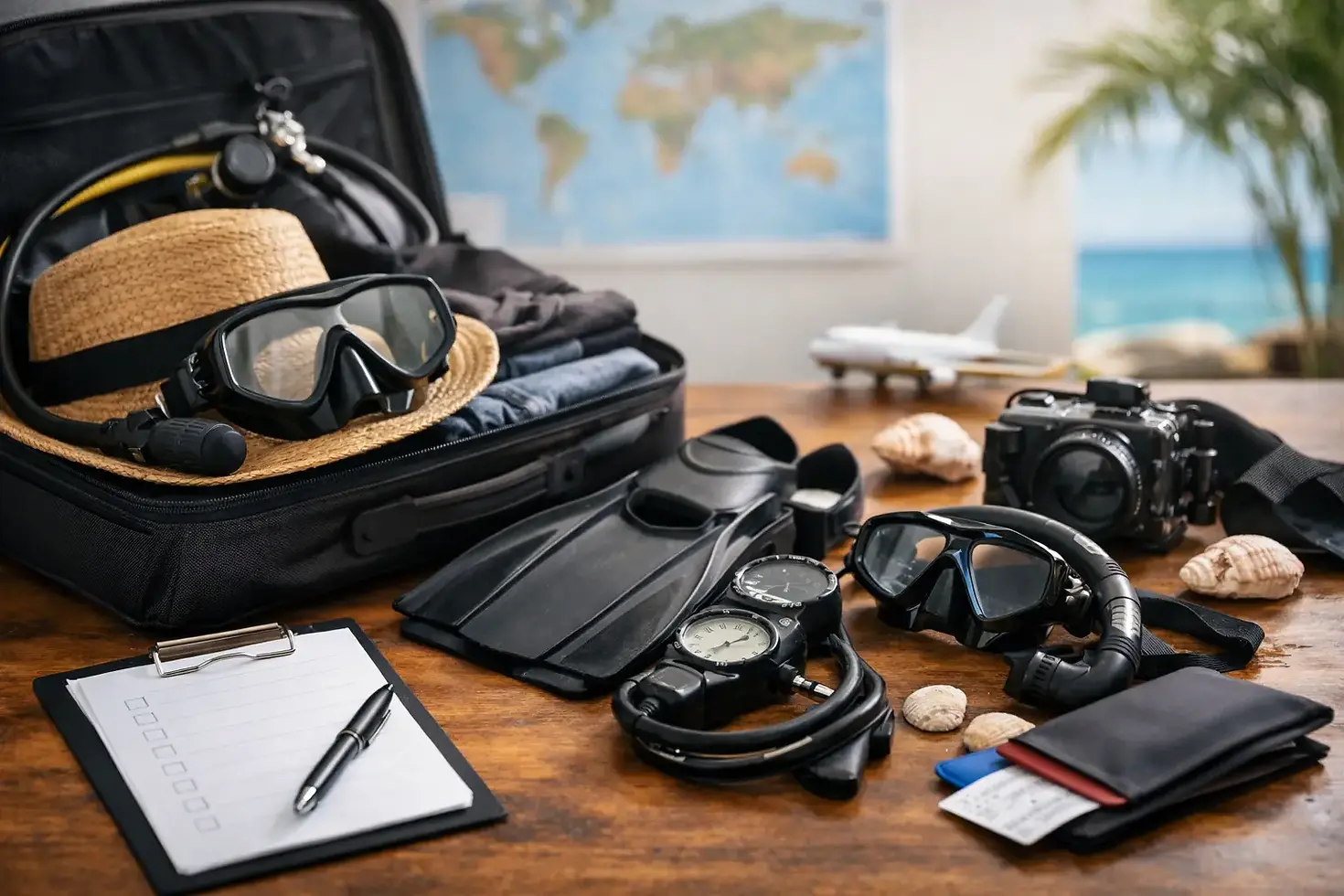
International Scuba Travel Checklist for Divers
- Mandy Buttenshaw

- Aug 5
- 6 min read
A missed connection is frustrating. A missed connection with your regulator, dive computer, prescription mask, and liveaboard departure waiting on the other end can derail a vacation fast. This international scuba travel checklist helps you handle the details before you leave home, so you can spend more of the trip underwater and less time solving avoidable problems.
Start With the Dive Plan, Not the Packing Pile
Every destination has different demands. A Caribbean resort week may mean short transfers, warm water, and easy shore support. A remote liveaboard can involve strict baggage limits, limited charging access, and no nearby dive shop if something gets left behind. Cold-water destinations add exposure protection, heavier equipment, and more complicated airline weight decisions.
Before packing, confirm your itinerary in practical terms: how many dive days you have, how many dives are planned each day, whether nitrox is available, expected water temperature, transfer times, and the amount of luggage your flights and local charters allow. Ask whether rental gear is available and, more importantly, which pieces are worth renting versus bringing from home.
Your comfort items usually matter most. If you own a mask that fits perfectly, a familiar computer, or a regulator you trust, those are not the things to gamble on. Fins, BCDs, weights, and tanks are often easier to rent, depending on the trip and your airline allowance.
International Scuba Travel Checklist: Documents and Coverage
Your passport should be valid for at least six months beyond your return date whenever possible. Several countries apply that rule, and airlines may refuse boarding if your documents do not meet entry requirements. Check whether your destination requires a visa, arrival form, proof of onward travel, vaccination documentation, or travel authorization before departure.
Keep digital copies of your passport, travel itinerary, dive certifications, insurance details, and emergency contacts in a secure location you can access from your phone. Carry printed copies as a backup, especially for remote destinations where Wi-Fi can be unpredictable.
For diving, bring your certification card or a reliable digital version, plus proof of nitrox certification if you plan to use enriched air. A current dive medical may be required by some operators, and any recent health changes deserve an honest conversation with your doctor before travel. Do not assume a standard health plan covers treatment overseas or diving-related incidents.
Travel insurance and dive accident coverage solve different problems. Trip coverage can help with cancellations, delays, lost baggage, and medical care abroad. Dive-specific coverage can help with hyperbaric treatment, evacuation, and medical transport. Read the policy language before you need it. The least expensive option is not always the best value if it excludes the activity that brought you there.
Carry On the Gear That Can Ruin the Trip
Airlines lose bags. Most are recovered quickly, but a bag arriving two days late is still a major issue on a short dive vacation or a liveaboard with a fixed departure. Put the hard-to-replace essentials in your carry-on, within airline rules.
For most divers, that means your mask, dive computer, regulator, swimsuit, certifications, medications, and a change of clothes. A compact snorkel and rash guard can be useful, too. If your checked bag is delayed, you may be able to rent most major gear and still make the first dives.
Lithium batteries require extra attention. Dive lights, camera batteries, strobes, and power banks are commonly required in carry-on luggage, with terminals protected from short circuiting. Airline rules vary by battery size and carrier, so confirm the policy for every flight in your routing. Never pack a leaking, swollen, or damaged battery.
Use a padded regulator bag, and avoid packing sharp tools or dive knives in your carry-on. Those belong in checked luggage. A small luggage scale is also worth bringing if you are taking domestic flights after an international arrival, because regional carriers may have lower weight limits than your long-haul airline.
Pack for the Water You Will Actually Dive
It is easy to pack for the destination you picture, rather than the conditions you will encounter. Tropical destinations can still have thermoclines, wind, rain, and long rides back from the dive site. A 3 mm wetsuit may be perfect for one diver and chilly for another after four dives a day.
Build your exposure protection around water temperature, dive frequency, and your personal cold tolerance. Bring a hooded vest, lightweight gloves, or a windbreaker if the conditions justify them. They take little space and can make a big difference by day three.
For a complete gear check, inspect these items at least a week before departure:
Regulator, alternate air source, gauges, and inflator hose
BCD bladder, dump valves, buckles, and weight system
Dive computer battery, settings, and charging cable
Mask strap, fin straps, snorkel keeper, and backup mask if you use one
Wetsuit, boots, gloves, hood, surface marker buoy, and reel
Lights, camera housings, O-rings, chargers, adapters, and spare batteries
Do not wait until the night before the flight to discover a dying computer battery or a cracked fin strap. Service regulators according to the manufacturer’s schedule, test your gear in water if possible, and pack a small save-a-dive kit with spare O-rings, zip ties, silicone grease, a mouthpiece, and basic tools. Keep it modest. On many trips, the best backup plan is knowing the local operator has quality rental gear available.
Plan Around Flights, Diving, and Recovery Time
The final dive does not end when you climb the ladder. Your body needs time before flying after diving, and the appropriate surface interval depends on your dive profile and recognized guidance. Build a conservative no-fly day into the itinerary rather than squeezing in one last dive before an evening flight.
That buffer day can become one of the best parts of the trip. Schedule a land excursion, enjoy a relaxed beach day, visit a local town, or simply dry gear and pack without rushing. It also protects your plans if weather changes the dive schedule or an operator shifts the final day of diving.
When booking flights, give yourself enough connection time to clear immigration, collect and recheck bags when required, and move between terminals. A 45-minute connection might look efficient on paper, but international arrivals, oversized dive bags, and delayed flights do not care about paper. For remote islands, consider arriving a day early if the liveaboard or resort transfer cannot wait.
Prepare for the Non-Diving Details
A great dive day gets better when the basics are handled. Tell your bank where you are traveling, carry more than one payment method, and keep a small amount of local currency for tips, taxis, and airport purchases. Check plug types and voltage at your destination, then bring the right adapter and enough charging capacity for cameras, lights, phones, and computers.
Pack reef-safe sun protection, a hat, polarized sunglasses, insect repellent, and a reusable water bottle. Bring any prescription medicine in its original labeled container, with enough for the full trip plus a few extra days. If you are prone to motion sickness, plan for it before the boat leaves the dock. The right medication works best when taken as directed before symptoms become severe.
Respect destination-specific environmental rules, too. Some marine parks restrict gloves, sunscreen ingredients, fishing gear, drone use, or collecting shells and coral. A little research keeps you from accidentally creating a problem for the operator or the reef.
Let the Itinerary Work as One Trip
Dive travel rarely involves just a hotel and a boat. It may include airport transfers, ferry schedules, a pre-trip city night, gear storage, post-dive sightseeing, and a flight that must line up with your no-fly interval. That is where a well-built itinerary earns its value.
Scuba Dive Agent plans trips from a diver’s perspective, whether you want a resort stay, a liveaboard, or both. We can help match the destination and trip format to your experience level, preferred pace, budget, and non-diving plans, then coordinate the details that are easy to overlook when booking each piece separately.
Print the final itinerary, label your bags clearly, and leave a little room in your schedule for the unexpected. The goal is not to pack every possible item. It is to arrive prepared, comfortable, and ready when the boat captain says it is time to go.


Comments