


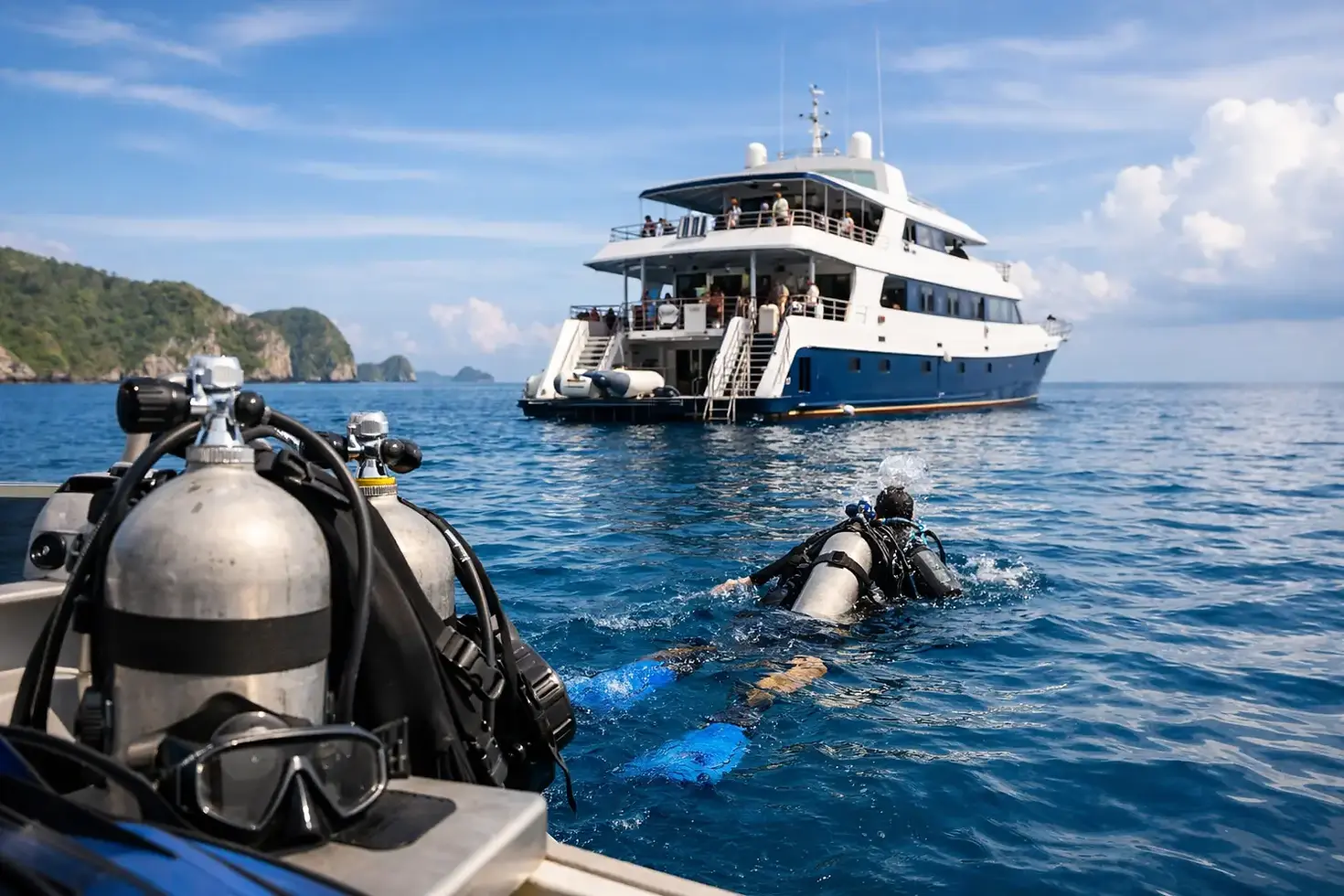
A Complete Guide to Scuba Liveaboards

You can tell a lot about a diver by how they react to the phrase early morning giant stride. Some people hear 6:00 a.m. briefing, four dives a day, and a week on a boat and think, perfect. Others immediately wonder about seasickness, small cabins, and whether they will get any sleep. That is exactly why a complete guide to scuba liveaboards matters. A liveaboard can be the best dive trip you have ever taken, but only if it fits your style, experience level, and tolerance for boat life.
What a scuba liveaboard is really like
A liveaboard is a dive trip where the boat is your hotel, dive platform, transportation, and daily routine all in one. Instead of commuting from a resort to nearby sites, you travel with the boat and wake up close to the diving. That usually means more dives, less wasted transit time, and access to sites day boats cannot reach comfortably.
For many divers, that is the biggest selling point. You spend more of your vacation actually diving. Remote reefs, sharkier passes, wide-angle walls, and dawn or night dives become much easier when your room is a short walk from the dive deck.
That said, liveaboards are not automatically better than land-based trips. They are more immersive, more efficient, and often more dive-focused. They can also feel more intense. If you want spa time, flexible meal plans, shopping, and a break from the dive crowd, a resort stay may fit better. Sometimes the smartest trip is a combination - a few nights on land before or after a liveaboard so you get both comfort and serious underwater time.
Who should book one and who should think twice
The best candidates for a liveaboard are divers who want to maximize diving and do not mind a structured schedule. If you are comfortable with repetitive diving, can manage your gear confidently, and enjoy being around the same group for several days, you will probably love it.
Newer divers can absolutely go on liveaboards, but trip selection matters. Some itineraries are gentle and beginner-friendly, with easy entries, moderate depth, and plenty of crew support. Others are built around currents, blue-water pickups, negative entries, and demanding conditions. A diver with ten easy tropical dives should not book a trip that quietly assumes advanced skills and current experience.
Non-diving partners can sometimes join, but not every liveaboard is a great fit for them. The whole rhythm of the trip revolves around diving. If someone does not dive, a resort or split itinerary may be the better call.
The complete guide to scuba liveaboards starts with fit
Most liveaboard disappointment comes from booking the wrong boat or route, not from the idea itself. Fit comes down to five things - destination, season, boat style, dive difficulty, and your real vacation goals.
Destination shapes almost everything. The Maldives offers current-driven channels, pelagics, and a very social liveaboard scene. Indonesia can mean anything from mellow muck diving to strong-flow reef itineraries. The Red Sea is famous for walls, wrecks, and excellent value. Galapagos is extraordinary, but it is not a casual first liveaboard.
Season matters just as much. Weather windows, visibility, water temperature, marine life patterns, and crossing conditions can change the experience significantly. A trip that looks great on paper may feel very different if you book outside the ideal season.
Boat style is easy to underestimate. Some boats are simple, functional, and all about the diving. Others feel much closer to floating boutique hotels. Neither is wrong. It depends on whether you care more about cabin size, privacy, camera facilities, chef-driven meals, and lounge space or just want a clean, efficient platform that gets you to great sites.
What a typical day looks like
Most liveaboards run on a steady rhythm. Light breakfast, first dive, full breakfast, rest, second dive, lunch, third dive, snack, maybe a sunset or night dive, dinner, sleep, repeat. It is a wonderful routine if you came to dive hard. It can feel like a lot if you are used to one or two dives a day.
The pace is one reason divers love liveaboards. You settle in, your gear stays set up, and the boat crew handles a lot of the lifting and logistics. But there is a trade-off. You need to manage hydration, fatigue, and nitrogen loading responsibly. Nobody wins by trying to prove they can do every offered dive if their body is asking for a break.
Cabins, comfort, and the reality of boat life
The brochure version of a liveaboard is all calm water and sunset decks. The real version is still great, but more practical. Cabins are usually compact. Storage is limited. Shared bathrooms are still common on some boats. Engine noise, rocking, and close quarters are part of the deal.
This is where expectations need to be honest. If you are a light sleeper, prone to motion sickness, or someone who needs a lot of personal space, choose carefully. Cabin location can matter. Lower-deck cabins may feel more stable but have less natural light. Upper-deck cabins often feel nicer but can move more.
Food is usually plentiful and better than many first-time guests expect. Still, special diets, strong coffee preferences, and snack habits vary by operator. It is worth asking questions upfront instead of assuming every boat runs the same way.
What liveaboards cost and what gets overlooked
A liveaboard can be excellent value when you look at how many dives are included, but the sticker price is not the whole story. Beyond the berth rate, you may need to budget for park fees, port fees, nitrox, equipment rental, crew gratuities, transfers, and hotel nights before or after the boat.
Flights are another big piece, especially for remote embarkation points. Some trips also require overnight stays because arrival timing and boat departure schedules do not line up safely with same-day international travel.
This is where expert trip planning saves people from surprise costs and bad connections. A cheap airfare that lands too late to make the boat is not cheap. The same goes for booking a return flight too soon after disembarkation and ending up stressed or, worse, rushed after a week of repetitive diving.
Safety, experience requirements, and red flags
Good liveaboards are serious about safety, but divers still need to do their homework. Check the experience recommendations and believe them. If a trip says advanced certification and recent current-diving experience are strongly recommended, treat that as real guidance, not marketing filler.
Ask about oxygen availability, emergency protocols, crew training, tender procedures, and whether nitrox is available for repetitive diving. If you have not dived in a while, take a refresher before the trip rather than hoping day one goes smoothly.
One overlooked point is travel insurance that covers dive incidents and trip disruption. Boats run on schedules, weather changes happen, and missed connections are expensive. The right coverage can turn a major headache into a manageable problem.
Packing for a liveaboard without overpacking
Packing for boat life is different from packing for a resort. Soft luggage is usually easier than a hard suitcase. Space is limited, and you do not need many outfit changes. Most divers live in swimsuits, rash guards, T-shirts, and sandals between dives.
Bring the gear you trust most for comfort and fit, especially your mask, computer, exposure protection, and SMB if required for the itinerary. Save-a-dive items are worth their weight in gold. A spare mask strap, extra batteries if appropriate, fin straps, zip ties, and basic meds can solve small issues before they become trip problems.
If you are prone to seasickness, start medication or your preferred remedy before the boat leaves the dock, not after you start feeling rough. That one choice can change your whole week.
Should you book a liveaboard, a resort, or both?
If your main goal is as much diving as possible at top sites, liveaboards are hard to beat. If you want a slower pace, more room to spread out, easier non-diver options, or a more flexible vacation rhythm, a resort may be the better fit.
A split trip often gives divers the best overall experience. Start with a resort to recover from flights, do a checkout dive, and ease into the destination. Then board the liveaboard ready to go. Or do it in reverse and finish on land so you can relax, sightsee, and satisfy no-fly time before heading home.
That kind of trip design is where concierge planning really pays off. Matching flights, transfers, dive schedules, and add-on sightseeing takes more coordination than most people expect. Scuba Dive Agent handles those moving pieces so travelers can focus on the fun part and get more time underwater with fewer planning headaches.
How to choose with confidence
The right liveaboard is not the fanciest boat or the most famous route. It is the one that fits your diving, your comfort level, your budget, and the kind of trip you actually want to have.
Be honest about your experience. Be realistic about your comfort on boats. Think beyond the brochure photos and picture the full week - the pace, the cabin, the conditions, the travel days, and the people you will share it with. Get that match right, and a liveaboard stops feeling like a complicated booking and starts feeling like the trip you will talk about for years.
If you are liveaboard-curious but not fully sure where you fit, that is a good place to start. The best dive vacations usually begin with the right questions, not a rushed reservation.


Comments