


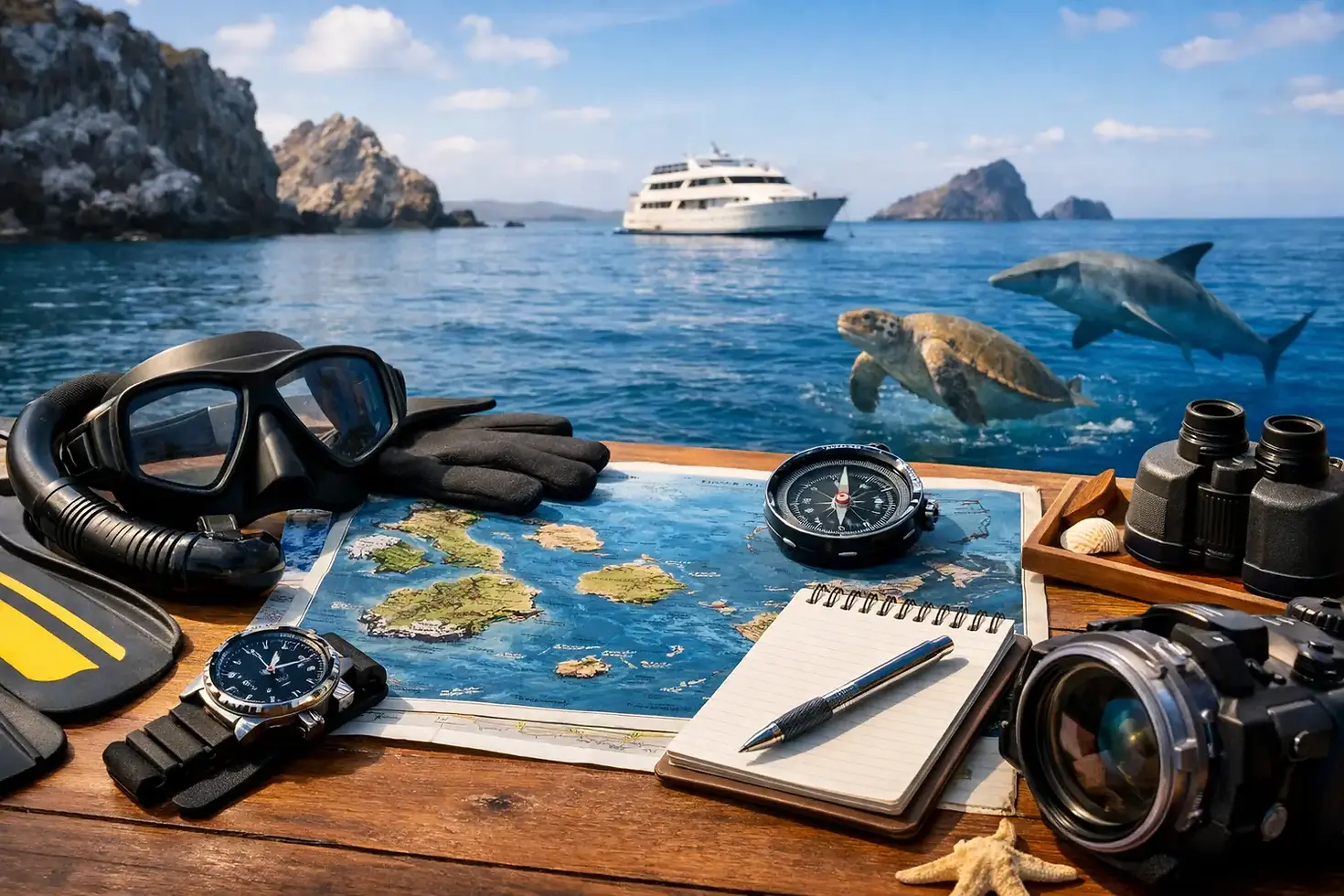
Galapagos Dive Trip Planning That Works

If the dream is hammerheads in every direction, whale sharks if timing lines up, and some of the most electric big-animal diving on the planet, Galapagos is probably already on your list. The catch is that galapagos dive trip planning is not the kind of vacation you throw together in a weekend. This trip rewards good decisions and punishes casual assumptions.
That does not mean it has to be complicated. It just means the right format, season, and logistics matter more here than they do for an easy Caribbean getaway. If you get those pieces right, the trip feels incredible. If you get them wrong, you can still have a good time, but you may spend a lot more money for a trip that does not match what you pictured.
Galapagos dive trip planning starts with one big choice
Before you look at cabins, flights, or camera gear, decide what kind of Galapagos trip you actually want. For most divers, this comes down to liveaboard versus land-based.
A liveaboard is the classic choice for serious Galapagos diving. If Darwin and Wolf are high on your list, this is usually the answer. Those remote sites are where many divers go for schooling hammerheads, Galapagos sharks, silky sharks, eagle rays, and, in season, whale sharks. You wake up close to the action, maximize diving time, and avoid the limitations of day-boat range.
A land-based trip can still be excellent, especially if you want a broader vacation with wildlife touring, more flexible comfort options, and a gentler pace. It can also work well for couples where one person dives and the other wants more topside variety. The trade-off is simple: easier logistics once you are on the islands, but less access to the most famous remote dive areas.
Neither option is universally better. It depends on whether your priority is the strongest possible dive itinerary or a more mixed Galapagos experience.
Pick the right season for the diving you want
One of the most common planning mistakes is asking for the "best" time to go without defining best for what. Galapagos changes throughout the year, and your ideal window depends on what you want to see and what kind of conditions you can comfortably handle.
The cooler season, roughly June through November, is often the favorite for experienced divers chasing pelagics. The water is colder, currents can be stronger, and visibility can vary, but this is when nutrient-rich water brings in the big stuff. If you are dreaming about hammerhead action and the possibility of whale sharks on northern itineraries, this season gets a lot of attention for good reason.
The warmer season, around December through May, tends to bring warmer water and somewhat calmer conditions in many periods. That can be appealing if you run cold, prefer a little less intensity, or want a trip that mixes diving with more comfortable topside touring. You may give up some of the dramatic cold-water productivity that advanced divers seek, but you can gain comfort and flexibility.
There is no fake promise here: Galapagos is not known for easy, lazy drift dives with bathtub-warm water. Even in the friendlier months, this destination tends to ask more of divers than many tropical trips do.
Be honest about your experience level
This is where good planning saves trips. Galapagos is often marketed through the lens of spectacular marine life, which is fair, but not always through the lens of task loading, current management, negative entries, surge, and repetitive diving in demanding conditions.
If you are an advanced diver with strong buoyancy, recent experience in current, and a calm attitude underwater, you are likely in a good place to enjoy it. If you are newly certified or have limited diving in the last year, it may still be possible to do parts of Galapagos, but the trip should be matched carefully. A land-based program with selective dive days may make more sense than jumping straight onto an intense liveaboard itinerary.
There is no prize for forcing the wrong trip. The better move is choosing a format that lets you feel confident and capable underwater. That is how you get more out of the destination.
Budget for the real cost, not just the cabin price
Galapagos is a bucket-list destination, and bucket-list destinations usually come with layers of cost. The headline price for a liveaboard or resort stay is only part of the picture.
Flights from the US, mainland Ecuador overnights, domestic air within Ecuador, park fees, transit control cards, rental gear if needed, nitrox on some programs, crew gratuities, and hotel nights before and after the trip can all add up quickly. On top of that, many divers want at least a little wildlife touring topside because it is Galapagos, and skipping the islands entirely outside dive hours can feel like leaving part of the experience on the table.
This is why cheap-looking options are not always cheaper in practice. An itinerary with awkward flight timing or missing transfers can create stress, extra hotel costs, or even missed connections to the boat. Good trip planning looks at the total trip, not one isolated line item.
Flights and timing need more cushion than usual
Galapagos is not the place to cut connections too tight. If your trip involves a liveaboard departure, build in buffer time on the front end. Arriving in Ecuador the day before your domestic connection is often the smart play, especially if you are coming from a US city with multiple flight segments.
The same goes for the return. If the liveaboard ends on a certain morning, that does not mean you should expect a smooth chain of same-day flights all the way home without backup time. Weather, airline schedule changes, baggage delays, and simple travel fatigue can turn a tight itinerary into a miserable one.
A well-built itinerary usually feels a little conservative on paper. In real life, that extra cushion is what makes the trip feel easy.
Gear choices matter more than usual in Galapagos
You do not need to overpack, but this is not a destination where gear planning should be casual. Exposure protection is the first big decision. Depending on season and your cold tolerance, many divers are happier in a 7mm suit, often with hooded vest or added thermal layers. Some prefer a drysuit if they are already comfortable diving one in current. If you have never used a drysuit, Galapagos is not the place to learn.
Reef hooks may be used on some dives where allowed and appropriate, but follow operator guidance and local rules. Gloves policies vary by operation and regulation, so do not assume. Good fins help. So does a surface marker buoy you know how to deploy properly.
For cameras, be realistic. The action can be fast, conditions can be dynamic, and this is not always the easiest place for perfect composition. If carrying a large camera rig makes your diving noticeably worse, simplify. You will enjoy the trip more.
Do not treat seasickness as a minor detail
On liveaboards, this can be the difference between a great week and a rough one. Some Galapagos crossings can be bumpy, and even divers who feel fine on day boats elsewhere can get caught off guard.
If you are even slightly prone to motion sickness, plan for it ahead of time. Bring the medication or remedies you know work for you. Test anything new before the trip if possible. Once you are already queasy at sea, it is much harder to get ahead of it.
This is one of those unglamorous planning details that pays off in a big way.
Add topside time if you can
A pure dive-first itinerary makes sense for some travelers, especially on a liveaboard, but Galapagos is one of the rare places where the non-diving side is also world-class. Blue-footed boobies, marine iguanas, giant tortoises, sea lions, lava landscapes, and volcanic scenery give the trip a second layer that many divers end up loving just as much as the underwater portion.
If your schedule and budget allow it, adding a pre- or post-dive stay can round out the experience nicely. This is especially useful if you are traveling with a non-diving partner or if you simply want a little breathing room around an intense dive schedule.
The right plan is not always the one with the maximum number of dives. Sometimes it is the one that gives you the best overall trip.
Why expert help makes a difference here
Galapagos is one of those destinations where the details are not small. The right boat for your budget, the right season for your goals, realistic flight timing, the right island add-ons, and honest matching of trip intensity to your experience level all matter.
That is exactly why many travelers prefer having a diver-led travel advisor sort through the options instead of comparing tabs for weeks and still wondering what they missed. At Scuba Dive Agent, we help travelers line up the format that fits, whether that is a full liveaboard, a land-based dive trip, or a broader itinerary that mixes serious diving with time to experience the islands above water too.
If you are planning Galapagos, think less about chasing a perfect checklist and more about building the right trip for you. The destination is strong enough on its own. Good planning just makes sure you get to experience the best of it without wasting time, money, or energy on the wrong setup.
The smartest next step is simple: pick the kind of trip you want, be honest about your comfort in challenging conditions, and give yourself enough margin for travel days, cold water, and the unexpected. That is how bucket-list diving starts to feel a lot less intimidating and a lot more bookable.


Comments