


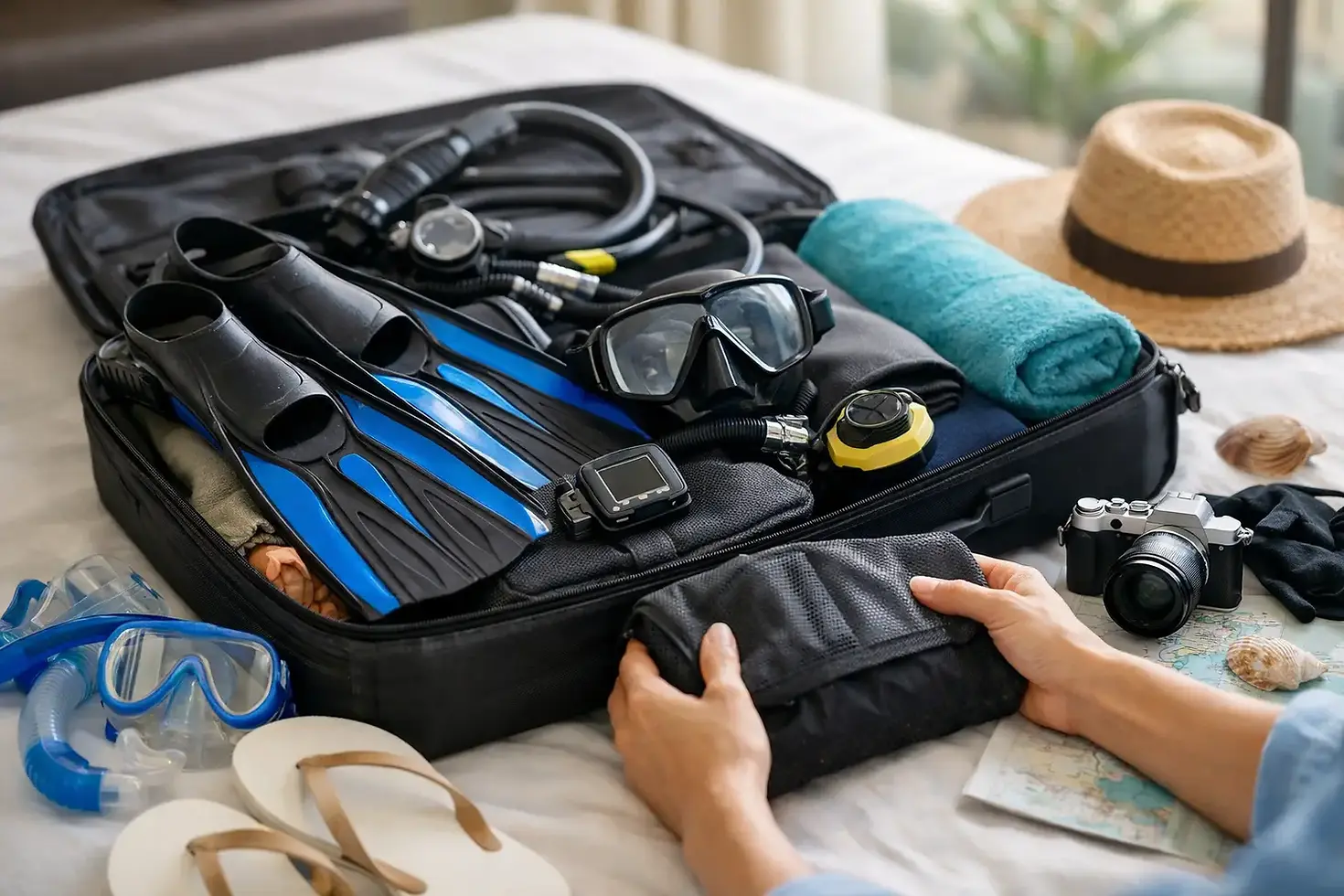
How to Pack for Dive Travel Without Stress

The fastest way to burn energy before a dive trip is to start packing the night before and hope for the best. If you’ve ever arrived with a dead dive computer, a missing mask, or a bag full of "just in case" items you never touched, you already know that how to pack for dive travel has a direct effect on how much you enjoy the trip.
Good packing is not about bringing everything you own. It’s about protecting the gear that matters, staying inside baggage limits, and making the first dive day easy. The right setup saves money on overweight fees, reduces stress in transit, and gives you more time to focus on why you booked the trip in the first place.
How to pack for dive travel starts with the trip itself
A warm-water resort week in the Caribbean does not need the same packing strategy as a remote liveaboard in Indonesia. Before you touch your gear closet, think through the structure of the trip. Are you doing boat diving only, or shore entries too? Are rentals available if something fails? Will you have laundry access? Are there strict weight limits on a domestic hop or seaplane?
This is where divers often overpack. They build for every possible scenario instead of the actual itinerary. If you’re on a full-service resort trip with easy rental options, you can be more selective. If you’re headed somewhere remote, self-contained, and transfer-heavy, it makes sense to be more conservative and bring more of your own essentials.
That trade-off matters. The more gear you carry, the more self-sufficient you are. But more gear also means more weight, more baggage handling, and more chances for something to get delayed. The sweet spot is bringing the items that are hardest to replace and most personal to your comfort in the water.
Pack your must-have dive gear first
If you only remember one rule, make it this one: pack the gear you cannot comfortably dive without before you pack anything else.
For most divers, that means mask, prescription mask if applicable, dive computer, exposure protection that fits properly, and often regulators. A poorly fitting rental wetsuit can ruin a trip. A mask issue can sideline a dive. A computer problem can affect your entire week. Those pieces deserve priority because they’re either highly personal or central to safe, comfortable diving.
Carry-on space is usually best reserved for your most critical and most fragile dive items. Your mask should be protected in a case. Your computer, chargers, and any specialty accessories should stay with you. Many experienced travelers also carry on their regulators, especially for long-haul international travel or any route with multiple connections. Bags get delayed. Essential gear in your carry-on gives you options.
Fins are the classic packing debate. If you love your own fins and the bag can handle them, bring them. If the trip has quality rentals and baggage limits are tight, this may be the easiest place to save space. The same goes for boots, snorkels, and backup accessories. It depends on destination, operator, and how particular you are about your setup.
Use a simple bag strategy
The best dive travel packing usually involves fewer bags, not more. One checked bag for larger gear and clothing, plus one carry-on for essentials, is a practical setup for most resort and liveaboard trips.
Your checked bag should be durable but not excessively heavy on its own. Hard cases offer protection, but they can eat up your weight allowance before you’ve packed a single fin. Soft-sided dive bags are often easier to manage and lighter, especially if your route includes vans, boats, or small regional airports.
Inside the bag, think in layers. Heavier gear goes near the wheels if the bag has them. Softer items like rash guards, swimsuits, and clothing can cushion regulators or other delicate pieces if those items are checked. Use packing cubes if you like them, but don’t feel like you need a highly engineered system. Simple and repeatable works better than complicated.
A small dry bag or waterproof pouch is worth packing too. It helps on transfer days, protects electronics on wet boats, and gives you a clean place to store a damp swimsuit or save-a-dive items.
Clothing is where most divers overdo it
You are going on a dive trip, not a fashion tour. Most days revolve around breakfast, diving, drying gear, eating, and sleeping. That means your clothing needs are usually lighter than you think.
Pack for the real rhythm of the trip. Lightweight shirts, a couple pairs of shorts, comfortable sandals, travel clothes for transit days, and one or two casual evening outfits are enough for most destinations. If you’re heading to a resort with a nicer dinner setting or adding city time before or after diving, adjust for that. Otherwise, resist the urge to pack for imaginary occasions.
The same logic applies to toiletries. Keep them compact and destination-aware. Reef-safe sun protection, basic medications, anti-chafe products, and motion sickness support can make a real difference. Full-size bottles and bulky extras usually just take up room you’d rather give to gear.
How to pack for dive travel when baggage limits are tight
Some of the best dive destinations come with annoying baggage realities. Small planes, island transfers, and regional routes may have lower weight limits than your international flight did. That’s where careful editing matters.
Start by wearing your bulkiest travel clothes on the plane. Then look at duplicate gear. Do you really need two exposure options? Two pairs of fins? A full camera rig plus every accessory you own? Sometimes yes, especially on a dedicated photo trip. But often, no.
If space is tight, prioritize safety, fit, and function over convenience. Keep the items that directly affect your comfort and ability to dive. Trim the extras that are nice to have but replaceable at the destination or easy to live without for a week.
A luggage scale helps because guessing rarely works. We’ve seen plenty of divers repacking on the airport floor because they assumed they were under the limit. Five minutes at home with a scale is much better than five stressful minutes at check-in.
Protect the small stuff that can derail the trip
Minor failures cause major irritation on dive vacations. A missing charging cable, dead computer battery, forgotten medication, or loose mask strap can create way more trouble than a big obvious item you knew you were missing.
Keep your small essentials together in one grab-and-go pouch. That can include chargers, adapters, batteries if appropriate for your gear, certification card, logbook if you use one, surface marker buoy, reef hook if needed for the destination, spare O-rings, mask defog, and basic save-a-dive items.
This doesn’t mean carrying a full workshop. It means covering the problems that happen all the time. You want enough backup to avoid losing dive time, not so much that your bag turns into a repair bench.
Documents and travel logistics matter too
Dive gear gets all the attention, but paperwork problems stop trips faster than forgotten fins.
Make sure you know what the operator or liveaboard requires before you leave. That may include certification cards, nitrox card, dive insurance details, passport validity, and any medical forms. Keep digital copies on your phone and easy-to-reach physical copies if the destination or operator tends to prefer them.
If you’re combining a resort stay with a liveaboard, or adding land touring before or after diving, pack with the transitions in mind. A bag that works for one hotel stay may feel very different when it’s being moved through airports, boat docks, and short domestic transfers. This is one reason many travelers prefer expert planning support. At Scuba Dive Agent, we see how trip structure affects packing long before departure day, especially on multi-stop itineraries and group trips.
Do a trial pack, then remove three things
A smart final step is to pack everything a few days early and look at it with fresh eyes. Once it’s all in the bag, ask yourself what you would cut if you had to lose five pounds. Usually the answer becomes obvious.
Most divers can remove three things immediately. It’s often extra clothing, duplicate accessories, or a backup item for a problem that almost never happens. Keep the gear that protects dive time. Cut the stuff that only protects your imagination.
Then check the basics one more time. Battery charged. Mask packed. Computer packed. Passport ready. Medications packed. If those are handled, you’re in good shape.
Packing well doesn’t make a trip feel less exciting. It makes the exciting part happen sooner. You get off the plane, your gear is where it should be, and your first morning starts with confidence instead of improvising at the dock.


Comments