


What Is a Liveaboard Dive Trip?

You can tell pretty quickly when someone has caught the liveaboard bug. They stop talking about hotel pools and start talking about four dives a day, sunrise briefings, and reaching sites day boats rarely touch. If you’ve been wondering what is a liveaboard dive trip, the short answer is this: it’s a dive vacation where the boat is your hotel, your transportation, and your base of operations for multiple days.
For a lot of divers, that setup is the fastest path to more bottom time and less daily hassle. But it is not automatically the right fit for every trip, every budget, or every travel style. That’s where a little clarity helps.
What is a liveaboard dive trip and how does it work?
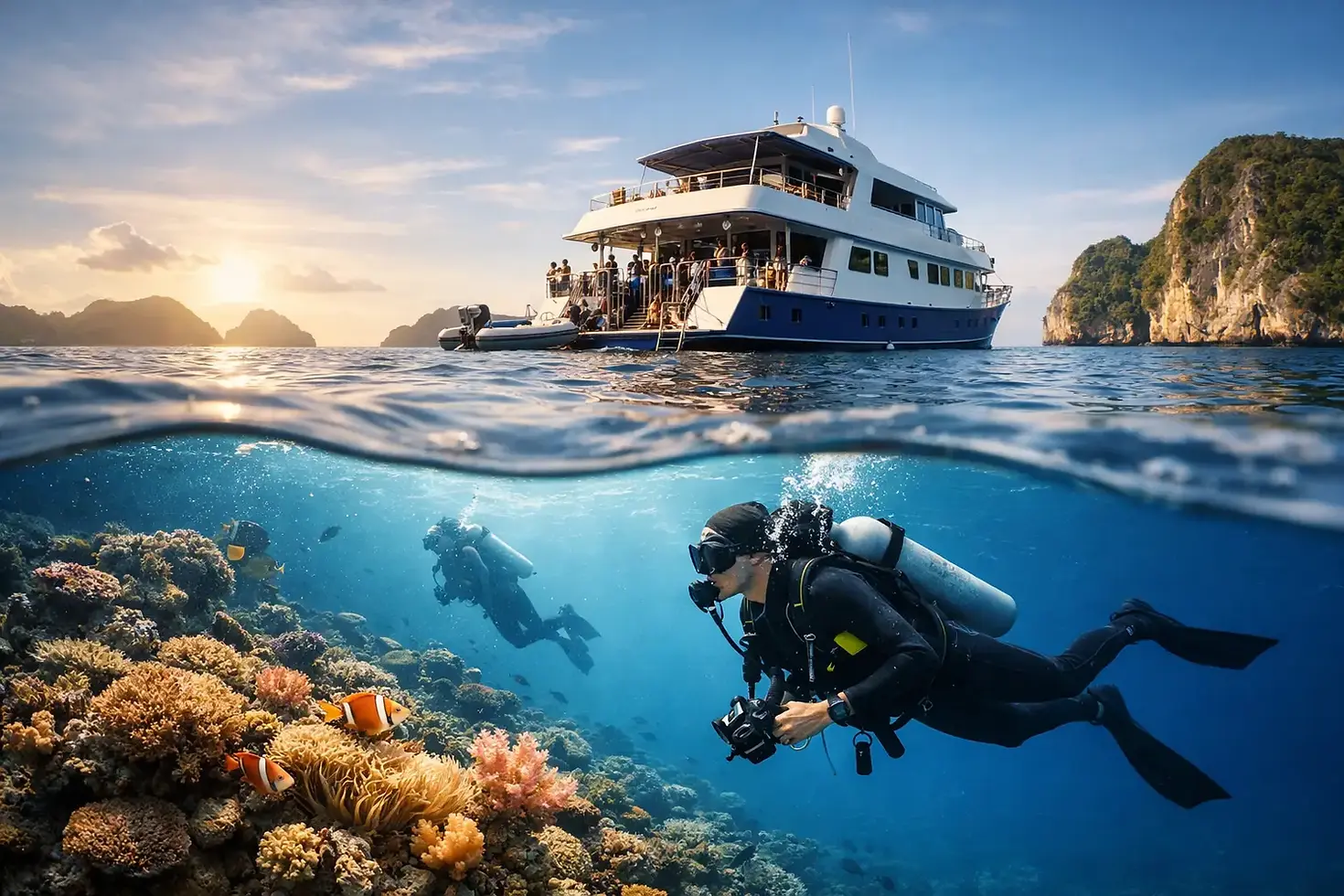
A liveaboard dive trip is a multi-day scuba trip on a dedicated dive boat with cabins, meals, crew, and a planned route through a dive destination. Instead of staying at a resort and taking day boats out each morning, you sleep onboard and move from site to site while the vessel travels, often overnight.
Most liveaboards run on a set itinerary. You arrive at the departure point, board the boat, settle into your cabin, meet the crew, and go through safety and dive briefings. From there, the rhythm becomes pretty simple: eat, dive, rest, dive again, eat again, sleep, repeat.
That routine is exactly why people love them. There’s no packing gear into a van before dawn, no commuting back and forth from a hotel, and no wasting prime dive hours in transit if the boat can reposition while you’re having dinner.
Why divers choose liveaboards
The biggest draw is access. Many of the world’s best dive sites are too far from shore for comfortable day trips, or they’re grouped in ways that only make sense if you stay out on the water. A liveaboard can put you on remote reefs, offshore pinnacles, channel dives, and marine parks without asking you to spend half the day getting there.
The second draw is volume. On a resort-based trip, you might do two dives a day, maybe three. On a liveaboard, three to five dives a day is common, depending on conditions, destination, and your own pace. If your goal is to maximize underwater time, this format is hard to beat.
There’s also the convenience factor. Your gear usually stays set up for the week. Meals are handled. Tanks are filled. The crew helps with logistics. You can focus on diving instead of coordinating transfers, boat schedules, and restaurant reservations.
For photographers, avid divers, and travelers with limited vacation days, that efficiency matters a lot.
What a typical day feels like
Every boat is a little different, but most liveaboard days have a similar flow. You’ll usually start early with coffee and a light snack before the first dive. After that, there’s breakfast, a surface interval, another dive, lunch, a rest period, then one or two more dives later in the day. Some itineraries include a night dive, which is often a highlight.
In between dives, people nap, review photos, chat on the sun deck, or stare at the horizon and remember why they booked this trip in the first place. It’s social if you want it to be, but there’s usually enough space to keep to yourself too.
The vibe onboard is one of the reasons liveaboards create such loyal fans. Everyone is there for the same reason. You’re surrounded by divers who are excited about the next site, comparing what they saw, and already talking about where they want to go next.
Who a liveaboard is best for
A liveaboard works especially well for divers who want a dive-first vacation. If your ideal trip means early starts, full dive days, and seeing as much underwater life as possible, you’ll probably love it.
It’s also a great fit for destinations where the best diving is spread out or remote. Think places known for pelagics, current-swept channels, or reef systems far from the main tourist hubs. In those cases, sleeping near the action gives you a real advantage.
That said, experience level matters. Some liveaboards welcome newer divers, while others are clearly built for advanced profiles with stronger currents, deeper dives, or repetitive schedules that can be physically demanding. The key is matching the boat and itinerary to your comfort level, not booking based on a destination photo alone.
Couples and friend groups often do well on liveaboards, especially if everyone wants the same kind of trip. If one person wants four dives a day and the other wants spa time and beach lunches, a resort stay might be the better call.
When a resort might be better
This is where the trade-offs come in. A liveaboard is efficient, but it’s not always the most flexible option.
If you’re prone to motion sickness, that doesn’t automatically rule it out, but it does deserve a real conversation before booking. Some routes are calm and protected. Others are not. Boat size, season, and crossing lengths all make a difference.
If you want a mix of diving and land activities, a resort can make more sense. Maybe you want a few days underwater and a few days exploring ruins, local food spots, or beaches with a non-diving partner. A land-based trip gives you more room to shape the vacation around more than diving.
There’s also the pace. Some divers love the steady rhythm of repeated dives. Others realize by day three that they wanted a little more downtime than they thought. A liveaboard can feel wonderfully immersive or a bit intense depending on your energy, interests, and travel style.
What’s included on a liveaboard dive trip?
Most liveaboards include your cabin, meals, snacks, diving, tanks, and weights. Many also include airport or hotel transfers tied to the embarkation schedule. But inclusions vary, and the details matter more than people think.
Marine park fees, nitrox, alcohol, equipment rental, crew gratuities, and port fees are often separate. Some boats include all of that in one package. Others do not. Cabin categories can also affect pricing, with lower-deck cabins usually costing less than upper-deck rooms with larger windows or more space.
This is one of the biggest reasons divers appreciate working with a specialist instead of guessing from a booking page. Two trips can look similar at first glance and end up feeling very different once you compare itinerary quality, boat standards, and true out-of-pocket cost.
Cabin life, comfort, and the reality onboard
A liveaboard is not roughing it by default, but it’s also not the same as checking into a big beachfront resort. Cabins are usually compact. Storage is limited. The boat runs on a schedule. You share space with other guests and follow onboard routines that keep the trip running smoothly.
That sounds obvious, but it’s worth saying because expectations shape the experience. Some liveaboards are simple and functional. Others are genuinely luxurious, with spacious cabins, camera rooms, chef-prepared meals, and polished service. Most fall somewhere in the middle.
The right choice depends on what matters to you. Some divers care most about the route and the guide team. Others want more comfort between dives. Neither approach is wrong. You just want the boat to match your priorities.
How to know if you’re ready to book one
If you’re asking what is a liveaboard dive trip because you’ve seen friends post incredible photos, that’s a fair starting point. But the better question is whether this style of diving fits how you actually want to travel.
A good liveaboard choice comes down to a few practical things: your dive experience, how many dives you want to do in a week, your comfort on boats, and whether your vacation is mainly about diving or about balancing diving with other experiences.
It also helps to think about destination fit. Some places are famous because the liveaboard format unlocks the best of them. In other destinations, a resort and day boat combo may give you a more relaxed trip with plenty of excellent diving. Sometimes the smartest plan is both - a few nights on land before or after the boat so you get stronger diving access without giving up the chance to explore topside.
That kind of planning is where expert help saves a lot of second-guessing. At Scuba Dive Agent, we help divers sort through liveaboard versus resort options based on actual trip goals, not just what looks good online.
The real appeal of a liveaboard
At its best, a liveaboard strips away the parts of dive travel that eat up time and keeps the parts you came for. More dives. Better access. Less shuffling around. You wake up close to the next site, gear up, and get in the water while the day still feels untouched.
And that’s really the answer. A liveaboard dive trip is not just a boat stay. It’s a way to build the whole vacation around the diving, which is exactly why so many divers try one and immediately start thinking about the next.


Comments